


Stiff After Sitting? Causes, Stretches & Back Pain Tips
06/11/26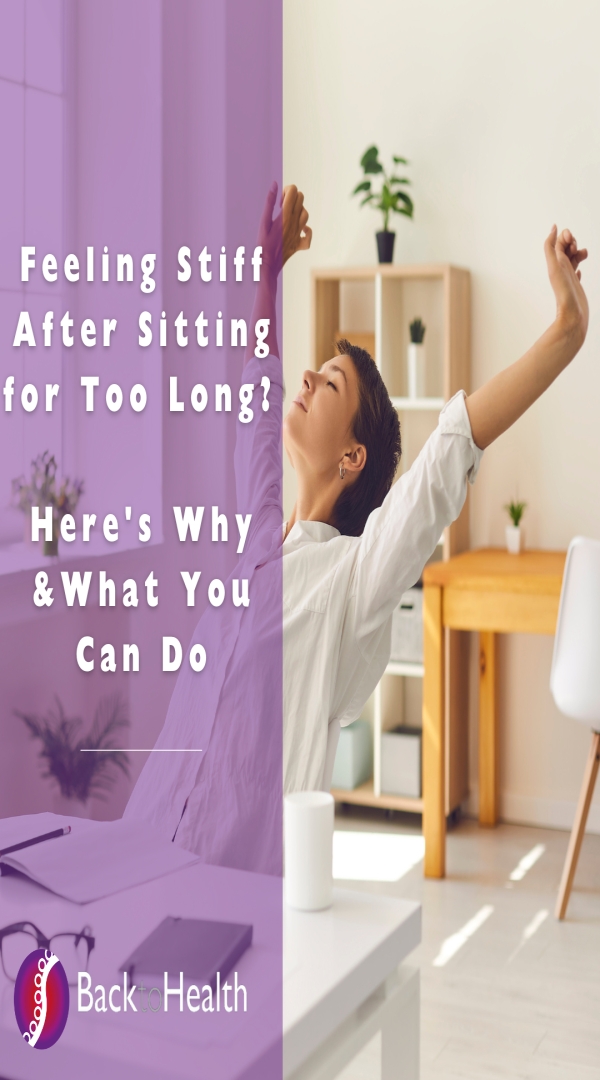
Feeling Stiff After Sitting for Too Long? Here's Why and What You Can Do
Ever stood up after a long day at your desk and felt like your body needed a few minutes to get going again?
Perhaps your lower back feels stiff, your hips seem tight or your legs take a moment to loosen up.
Sound familiar?
Whether you've spent the day working at a computer, been stuck in the car on a long journey or enjoyed a few hours on the sofa, most of us have experienced that uncomfortable feeling when we first get moving again.
But why does it happen? Is sitting really that bad for us? And should we be stretching more?
The good news is that feeling stiff after sitting doesn't necessarily mean something is wrong with your muscles or joints. Often, a few simple changes to your daily routine can help.
Why Do We Feel Stiff After Sitting for Long Periods?
Our bodies are designed to move, but modern life often involves spending hours in the same position.
From answering emails and attending meetings to driving and watching television, it's surprisingly easy to spend much of the day sitting down.
When we stay in one position for a long time, our muscles and joints aren't moving through their usual range of movement. As a result, we may notice temporary stiffness or discomfort when we stand up.
There are several possible reasons for this.
1. Your Muscles Haven't Been Moving Much
When you're sitting, some muscles remain in relatively fixed positions while others aren't being used very much.
This doesn't mean they're suddenly becoming shorter or damaged. However, remaining still for a long time can leave your muscles feeling tight or uncomfortable when you start moving again.
A short walk or a few gentle movements may be enough to help you feel more comfortable.
2. Your Hips and Lower Back May Feel Tight
Sitting keeps your hips bent for extended periods, and your lower back remains in a relatively limited range of positions.
If you've been sitting for several hours, standing upright or taking your first few steps may feel a little uncomfortable.
This is particularly noticeable if you already experience back pain, hip discomfort or reduced mobility.
3. Your Body Likes Variety
Here's something that might surprise you.
There isn't one perfect sitting posture that everyone should maintain all day.
Although sitting comfortably and having a suitable workstation are important, research doesn't support the idea that one particular posture will prevent back pain.
Instead, changing positions regularly and keeping physically active throughout the day can help.
So, rather than worrying about sitting perfectly straight, think about giving your body more opportunities to move.
Is Sitting All Day Bad for Your Back?
Not necessarily!
Sitting itself isn't dangerous, and there's no need to worry that spending half an hour at your desk is damaging your spine.
However, spending much of the day inactive isn't ideal for your general health.
The NHS recommends breaking up long periods of sitting with movement and making regular physical activity part of everyday life.
And that doesn't mean you need to head straight to the gym.
Walking to make a cup of tea, standing up to take a phone call or moving around between meetings can all help you spend less time sitting still.
The aim isn't to avoid sitting. It's to find a better balance between sitting and moving.
Can Stretching Help Relieve Stiffness?
Stretching can be a useful way to maintain flexibility and help certain muscles feel more comfortable.
If your legs, hips or back feel tight after sitting, some gentle stretches may provide temporary relief.
However, stretching isn't a cure for every ache or pain, and it doesn't automatically prevent injuries.
It's also worth remembering that flexibility is only one part of keeping your body healthy.
Regular movement, muscle strength and general fitness all play an important role.
5 Simple Ways to Reduce Stiffness After Sitting
You don't need a complicated exercise programme to start making a difference.
Here are five simple things you can try during your working day or whenever you've been sitting for a while.
1. Get Up and Move Regularly
This is probably the simplest place to start.
Try getting up and changing position every 30–60 minutes, or whenever you begin to feel uncomfortable.
Walk around the room, head to the kitchen or take a quick stroll outside.
Even a minute or two of movement can help break up long periods of sitting.
And if you occasionally forget because you're busy? Don't worry. Just move when you remember.
2. Give Your Hips a Gentle Stretch
If your hips feel tight after sitting, try a gentle standing hip flexor stretch.
-
Stand with one foot slightly in front of the other.
-
Bend your front knee gently while keeping your back leg behind you.
-
Move your hips forwards slightly until you feel a comfortable stretch at the front of your back hip.
-
Hold for around 15–30 seconds, then change sides.
Keep the movement comfortable and avoid forcing yourself further into the stretch.
3. Stretch Your Hamstrings
Your hamstrings are the muscles at the back of your thighs.
If they feel tight, a gentle stretch may help.
-
Sit towards the front of a sturdy chair.
-
Straighten one leg in front of you, keeping your heel on the floor.
-
Lean forwards slightly from your hips, keeping your back comfortable.
-
Stop when you feel a gentle stretch along the back of your thigh.
-
Hold for around 15–30 seconds, then repeat on the other side.
You should feel a stretch, not sharp pain.
4. Keep Your Back Moving
If your lower back feels stiff after sitting, try a few gentle standing movements.
Place your hands on your hips and slowly move your pelvis forwards and backwards, or gently turn your upper body from side to side.
There's no need to force the movement or push through significant discomfort.
The idea is simply to explore some comfortable movement after being still.
5. Build Strength Throughout the Week
Stretching feels good, but strengthening exercises deserve just as much attention.
Strong muscles help support everyday movements, whether that's climbing stairs, lifting shopping bags or getting up from a chair.
Simple exercises such as sit-to-stands, squats, heel raises and walking uphill can all help build strength.
The NHS recommends muscle-strengthening activities on at least two days each week, alongside regular aerobic activity.
Start at a level that suits you and gradually build up.
Should You Stretch Before or After Exercise?
The original advice used to be that everyone should stretch before exercising.
We now know it's a little more complicated than that.
Before physical activity, it's generally helpful to warm up with gentle movements that gradually prepare your body for what you're about to do.
For example, before going for a run, start with brisk walking and gradually increase your pace.
Long, static stretches aren't always necessary before exercise, particularly if you're preparing for activities that require speed or power.
If you enjoy static stretching, you can include it separately or after exercise when your muscles are warm.
The important thing is to stretch gently, avoid bouncing or forcing movements and stop if you experience sharp or worsening pain.
What About Your Desk Setup?
If you spend most of your working day at a computer, it's worth checking that your workstation feels comfortable.
Your chair should support you, your screen should be at a suitable height and your keyboard and mouse should be easy to reach.
But remember, even the most expensive ergonomic chair won't replace the benefits of regular movement.
Try changing your sitting position throughout the day rather than holding yourself rigidly in one position.
If you work from home, you could even use a phone call as an excuse to stand up and walk around.
Sometimes the simplest changes are the easiest to stick with!
When Should You Get Stiffness or Back Pain Checked?
Occasional stiffness after sitting is common and often settles once you start moving.
However, if you're regularly struggling with back pain, hip discomfort, neck stiffness or symptoms that are affecting your everyday activities, it's worth finding out what's going on.
You should also seek professional advice if your symptoms are getting worse, aren't improving or are accompanied by persistent tingling, numbness or weakness.
If you develop back pain alongside new bladder or bowel control problems, numbness around your groin or saddle area, or significant weakness in both legs, seek emergency medical assessment.
Don't assume persistent symptoms are simply the result of sitting too long.
How Can Chiropractic, Osteopathy or Physiotherapy Help?
At Back to Health, we regularly see patients who experience back pain, neck discomfort, muscle tightness and stiffness during everyday activities.
Some spend long hours working at a desk. Others drive for a living, have physically demanding jobs or simply find that certain movements have become uncomfortable.
Whatever your situation, the first step is understanding what's contributing to your symptoms.
Our experienced Chiropractors, Osteopaths and Physiotherapists can assess your movement, discuss your symptoms and help you understand what might be going on.
Depending on your individual needs, your care may include hands-on treatment, tailored exercises, strengthening and rehabilitation, or practical advice about your daily activities.
We can also help you find ways to introduce more movement into your routine without making it feel like another job on your to-do list!
Don't Let a Day at Your Desk Leave You Feeling Stiff!
Whether you're working in an office, driving between appointments or spending a quiet afternoon on the sofa, sitting is a normal part of life.
You don't need to avoid it, and you certainly don't need to worry about maintaining perfect posture every minute of the day.
The key is to move regularly, build strength and find activities you enjoy.
And if stiffness or discomfort is becoming a regular problem, you don't have to simply put up with it.
At Back to Health, our Chiropractic, Osteopathy and Physiotherapy teams offer personalised care across our Wrexham, Mold and Chester clinics.
If back pain, neck stiffness or joint discomfort is getting in the way of everyday life, get in touch with our friendly team to find out how we may be able to help.
Visit www.back-to-health.co.uk to find out more or book an appointment.
Keep moving, stay active and give your body a break from sitting still!
Back to Health – Health and Wellbeing, Hand Delivered.
Did you know?
Chiropractic is covered by all medical insurance companies and most healthcare cash plans! Our clinics are registered with all the major companies. We recommend you book in for a spinal and muscular screening to make the most of your policy